Industry
Fintech
Client
Pay Track
Fintech Debt Recovery App. A UX Approach to Financial Recovery.
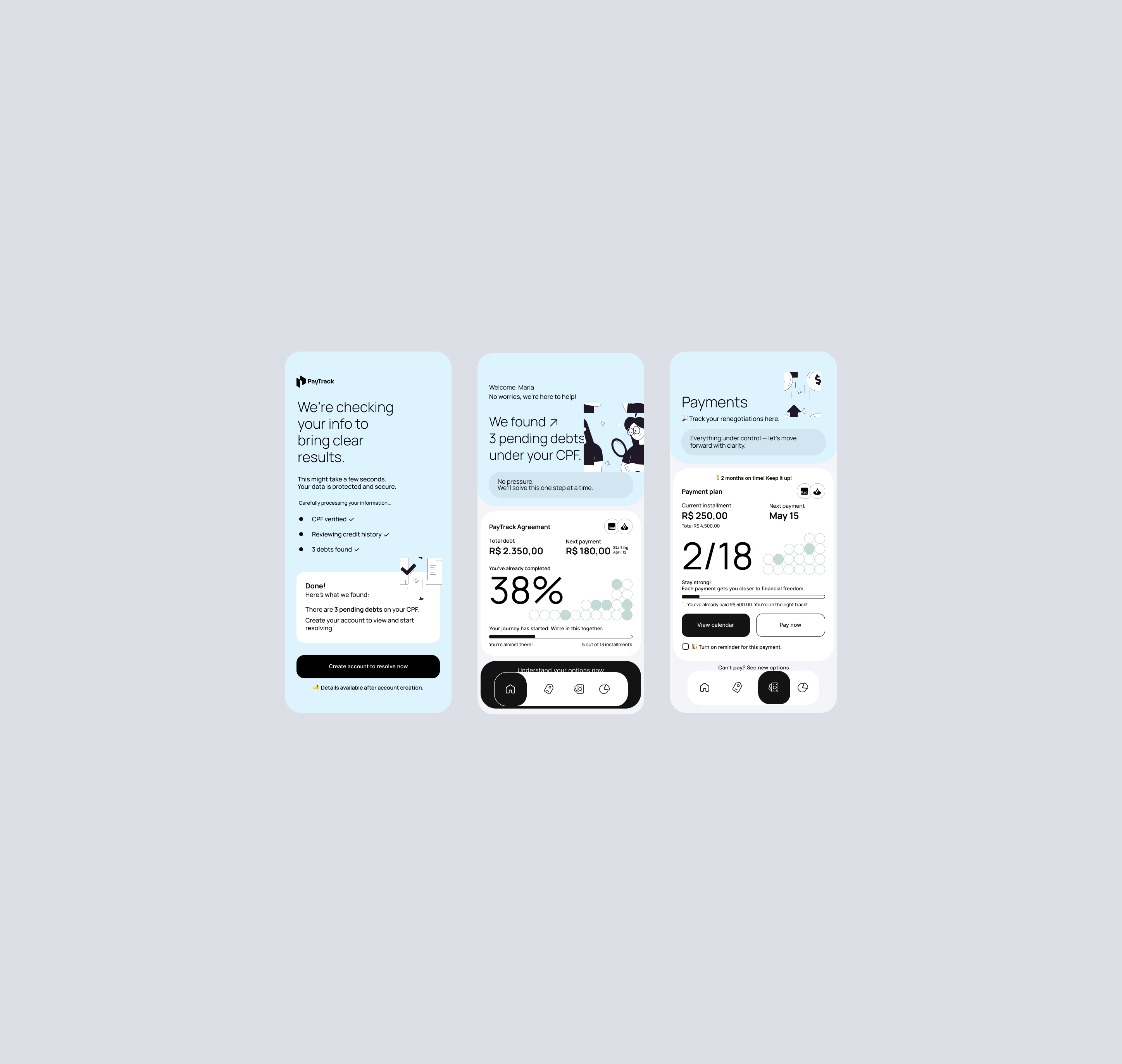
Beyond the Charge: Designing a Human-Centered Path to Financial Recovery
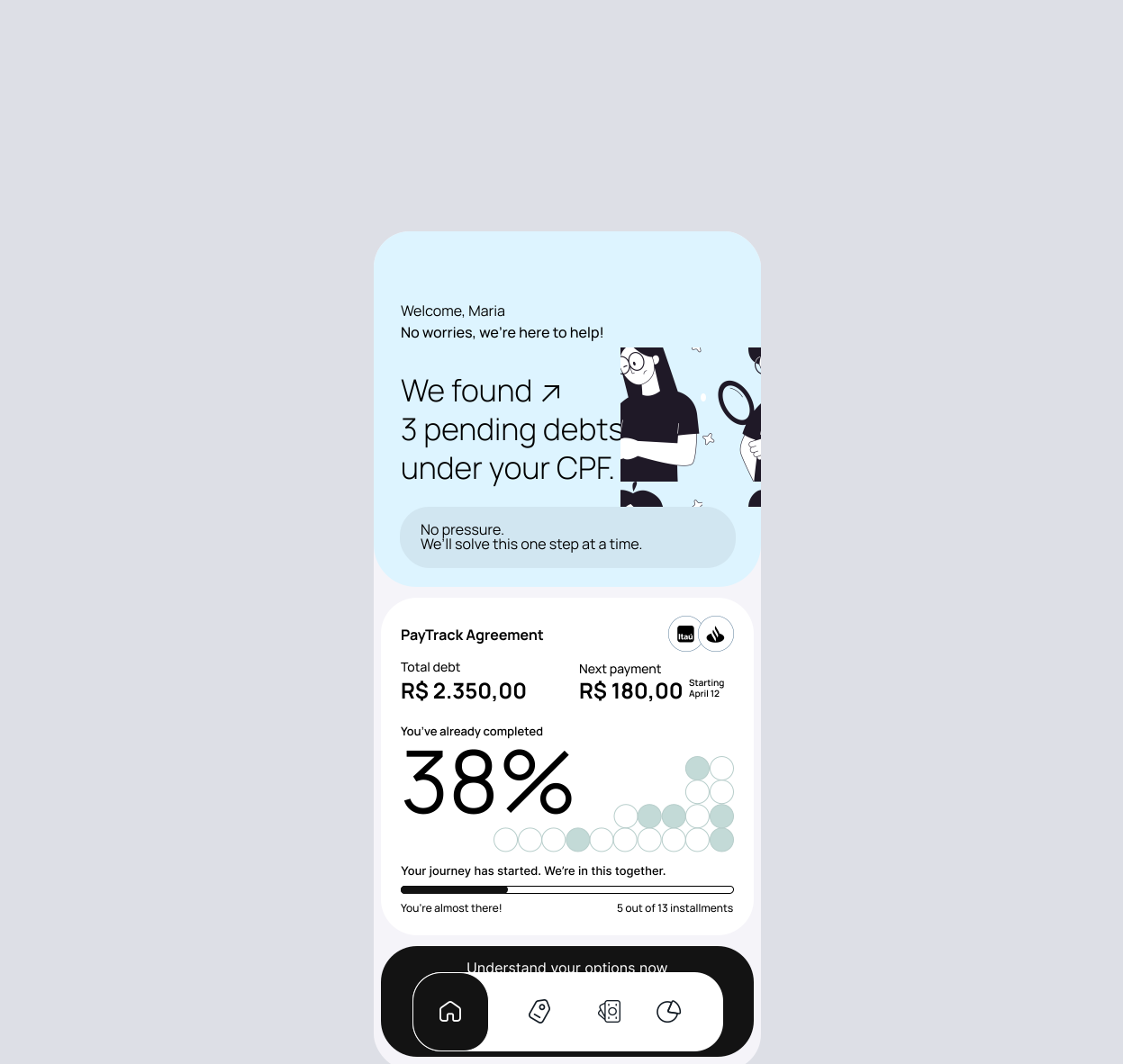
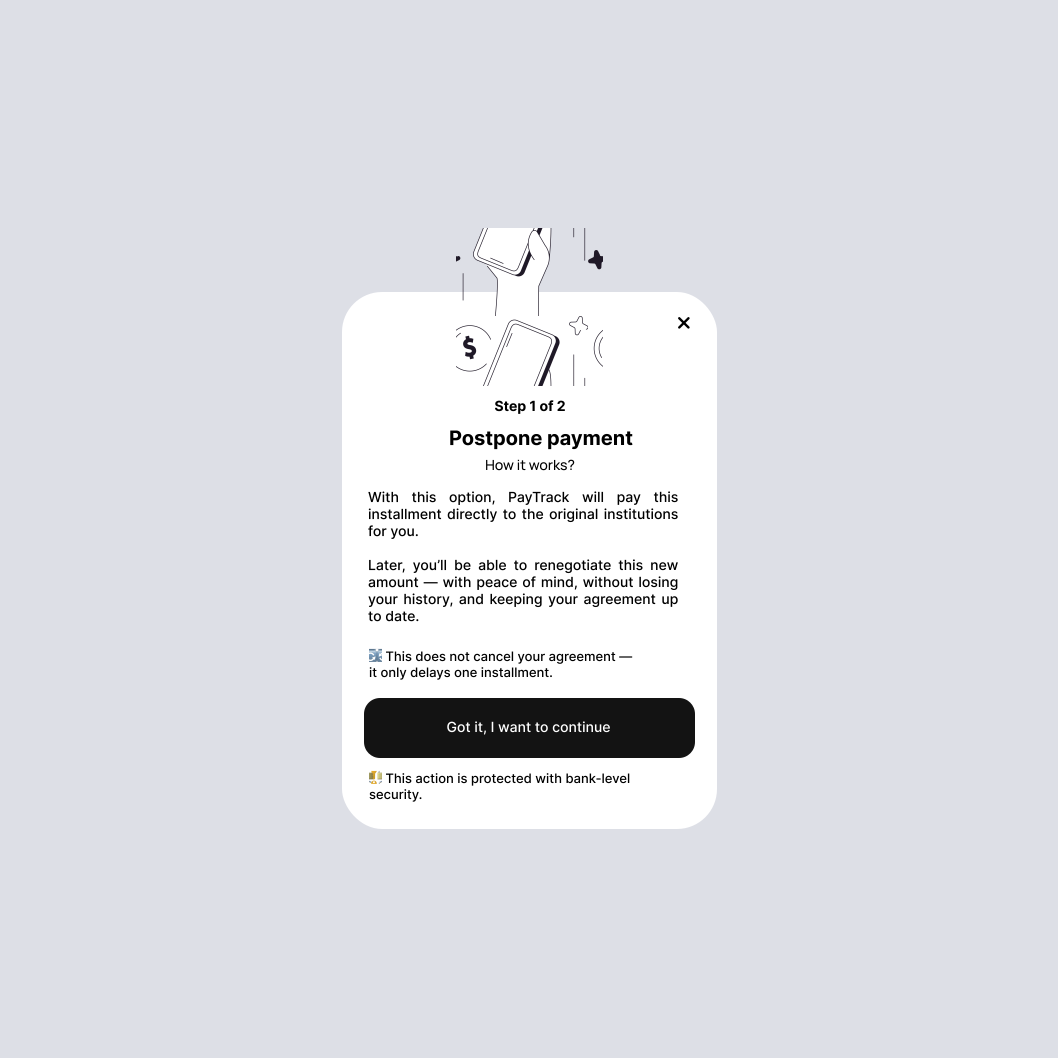
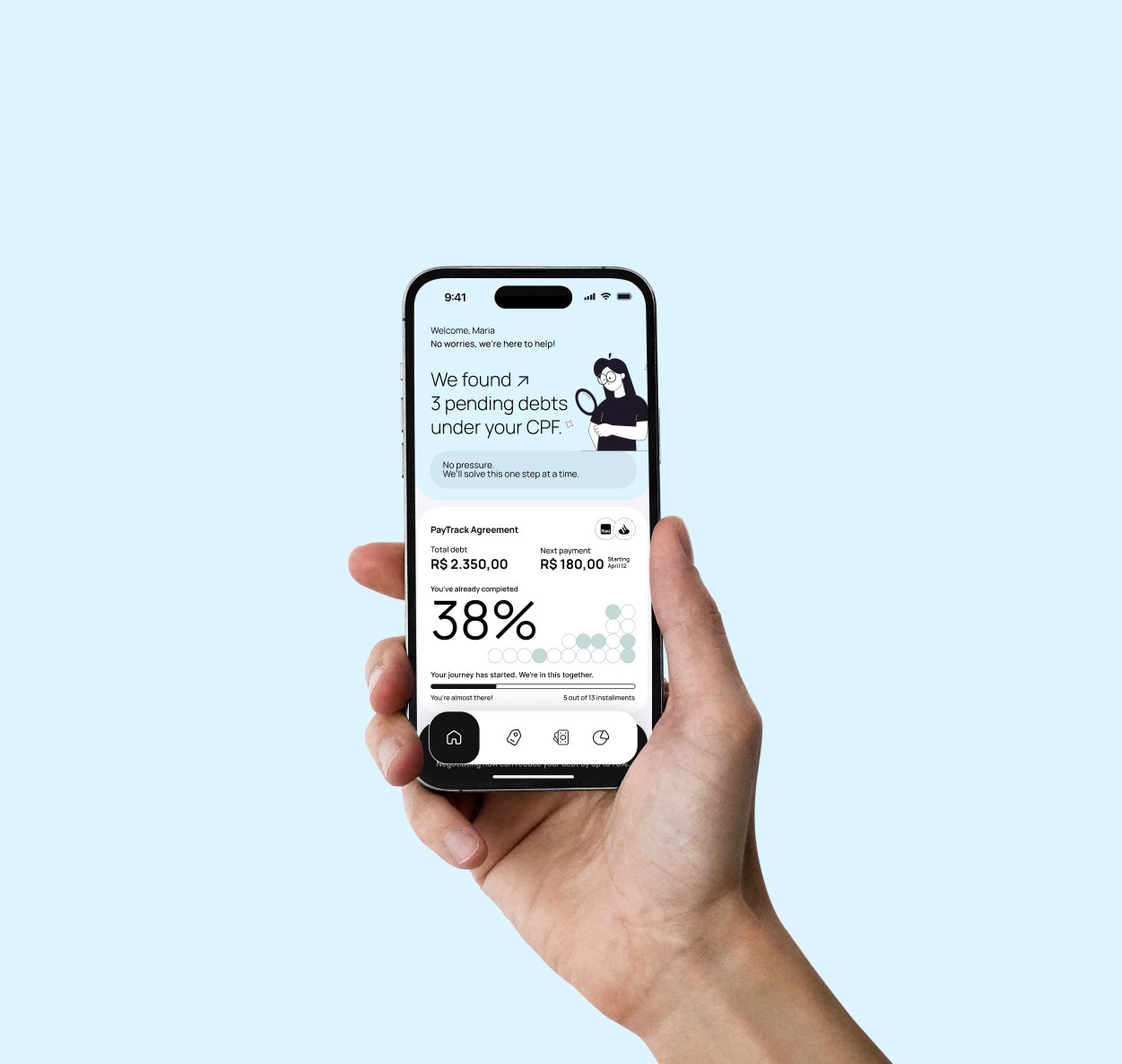
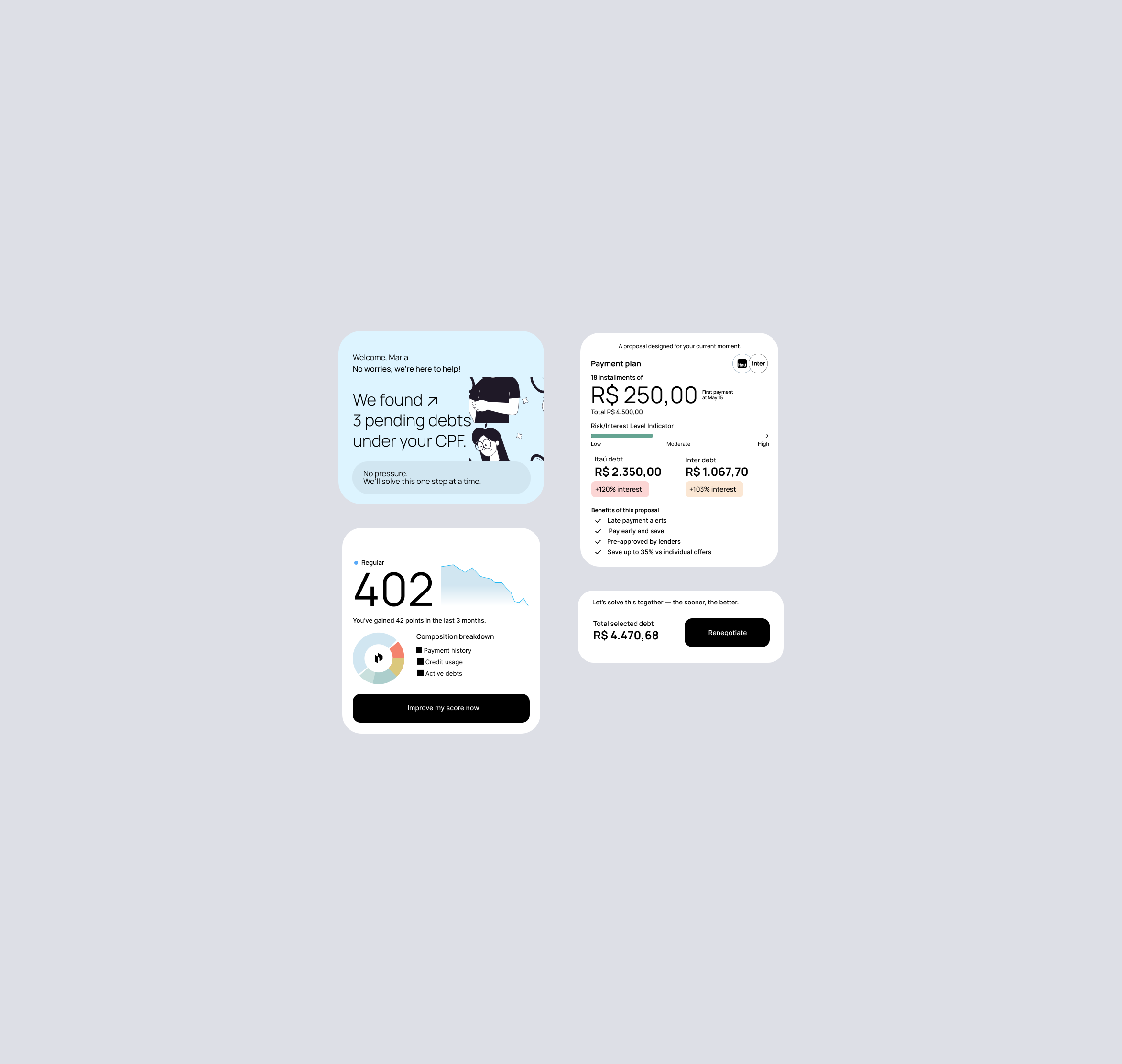
Brazil faces one of the highest default rates globally, with millions struggling to regain financial control due to fragmented, bureaucratic, and emotionally disconnected repayment solutions. In response, Pay Track was designed to centralize debt information, simplify negotiations, and drive commitment through a clear, fast, and supportive user experience. Backed by field research and behavioral insights, the app delivers an end-to-end journey—from onboarding to repayment—optimizing for clarity, emotional resonance, and measurable conversion. This project showcases how UX can actively contribute to financial recovery and long-term user retention. Note: This product was originally designed for the Brazilian market. All UI screens were translated into English to ensure global understanding—without losing local context.
Problem Statement
In 2023, over 70 million Brazilians were in default. Despite the scale of the issue, most existing debt negotiation platforms are fragmented, bureaucratic, and lack user-centric design. These systems fail to address key behavioral and emotional barriers, resulting in low engagement, high abandonment rates, and limited financial recovery outcomes.
Possible Solution
A user-centric app that centralizes all debts in one place. Uses empathetic and non-judgmental language. Suggests realistic negotiations based on the user's profile. Provides goals, tips and tools for rebuilding credit and increases the revenue recovery rate.
My Role
UX/UI Designer, responsible for research, strategy, information architecture, usability testing and prototyping.
Design Process
The development of Pay Track followed a user-centered, iterative design methodology structured in four main phases: Discover, Define, Design, and Deliver.
Discover: User and market research, Interviews with experts and defaulters.
CSD Matrix / Desk Research
Define: Created behavioral personas. Defined decision-making bottlenecks. Prioritized emotional triggers.
Personas / User Journey / User Stories / Feature Mapping
Design: Designed low-fi wireframes to test core flows. Built interactive prototypes and tested usability.
Information Architecture / Wireframes
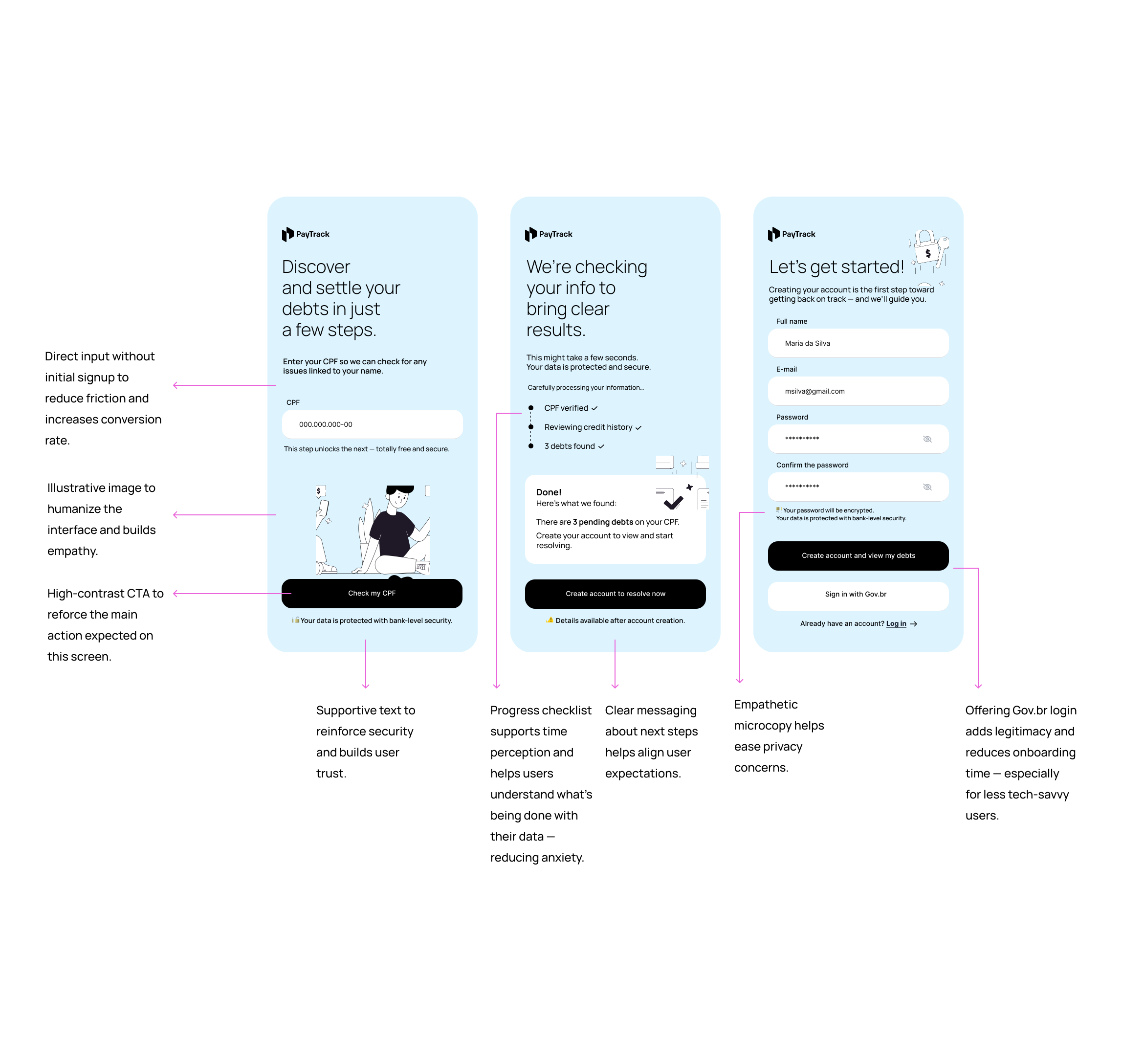
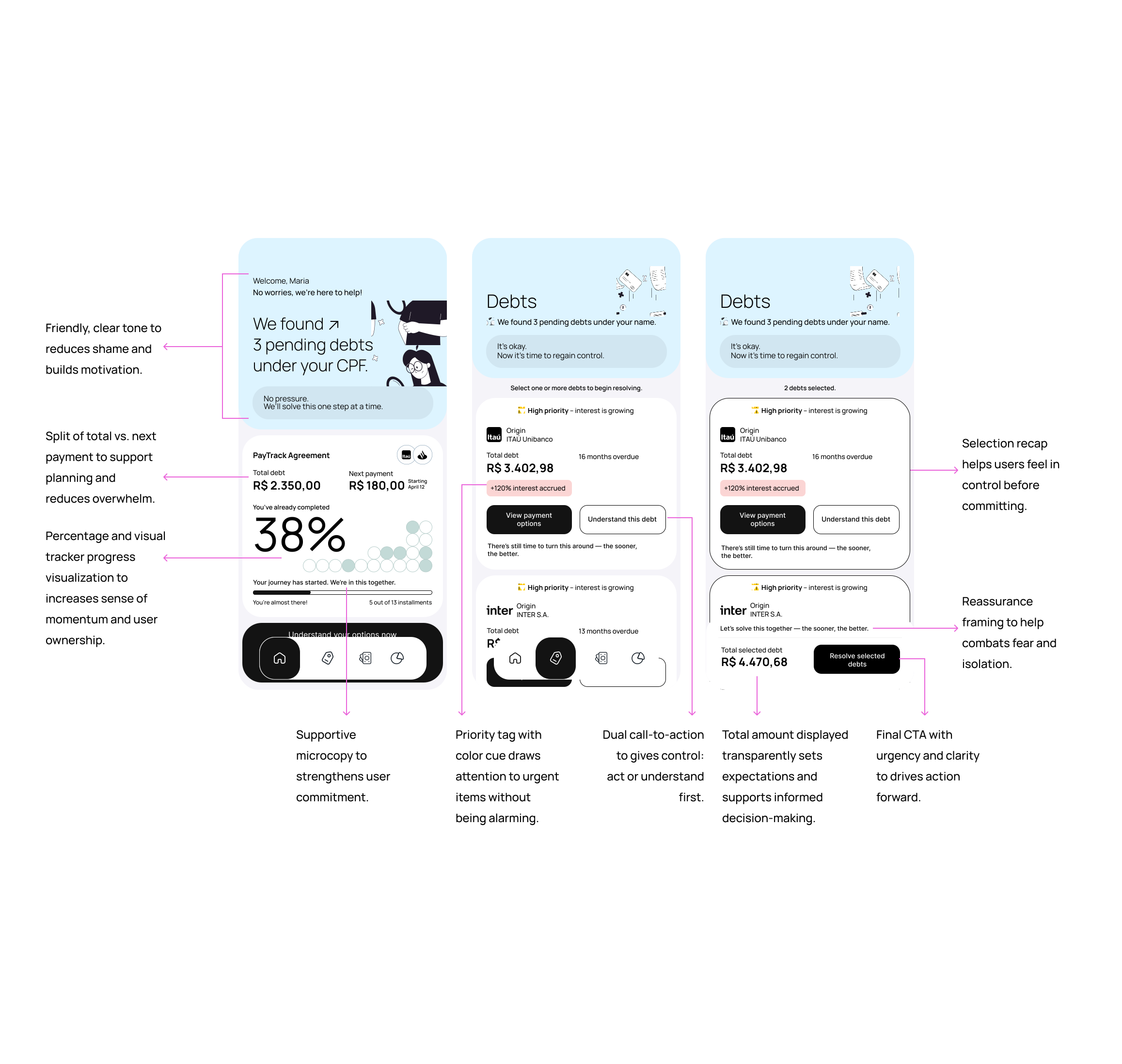
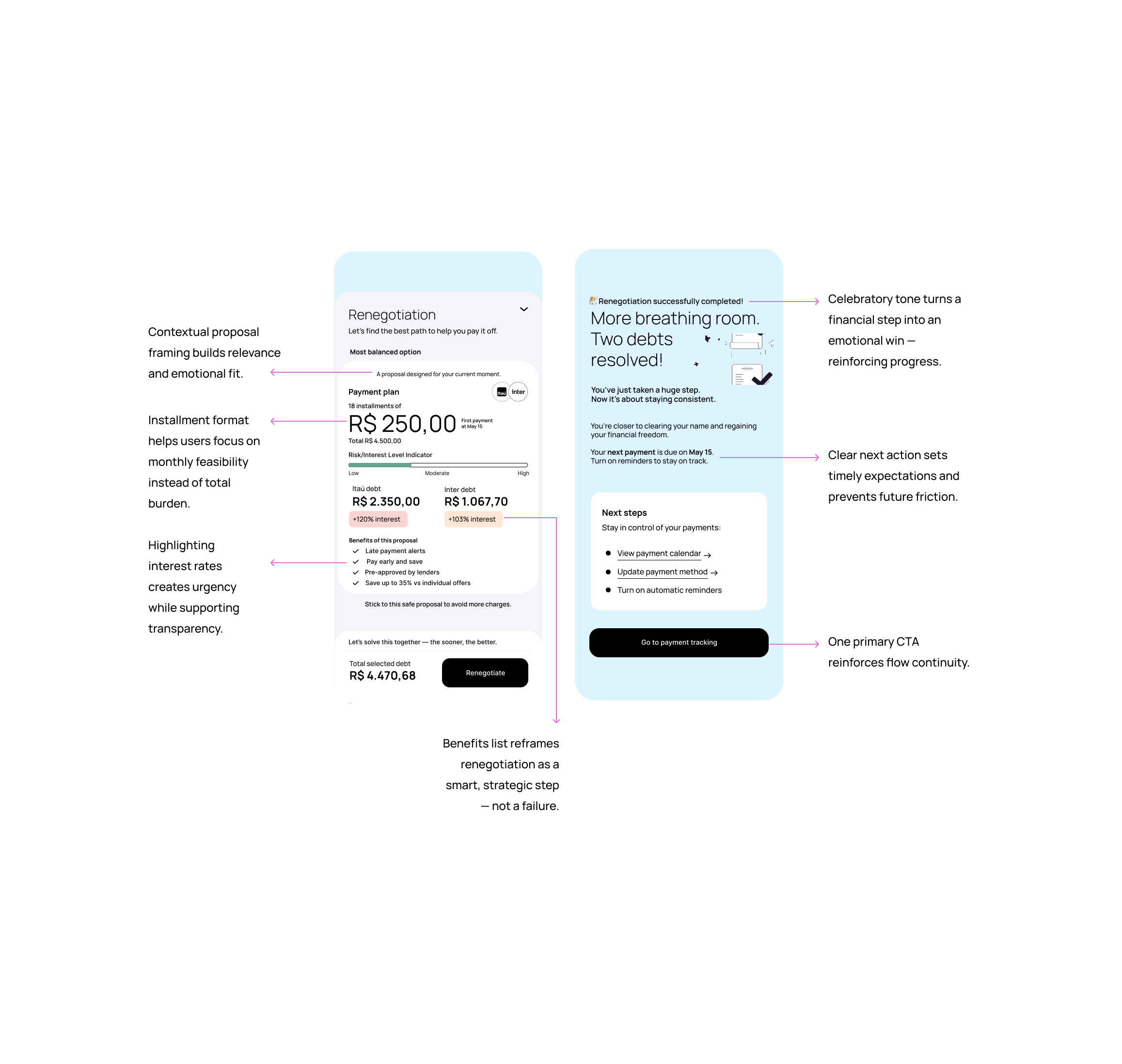
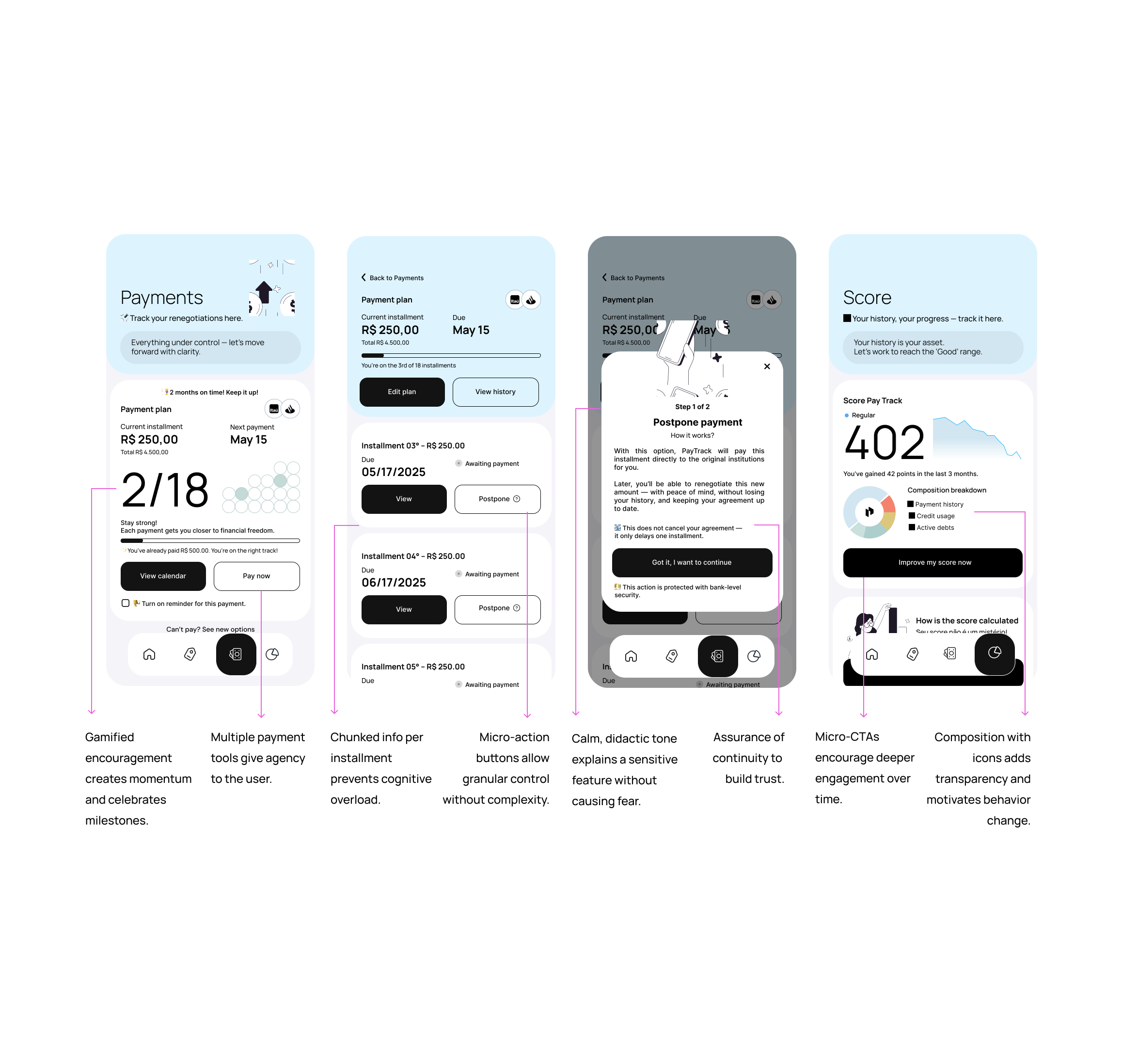
Deliver: High-fidelity UI focused on trust, urgency, and clarity. Strategic microcopy, focus on conversion.
Final Prototype
01
Discover Phase
CSD Matrix
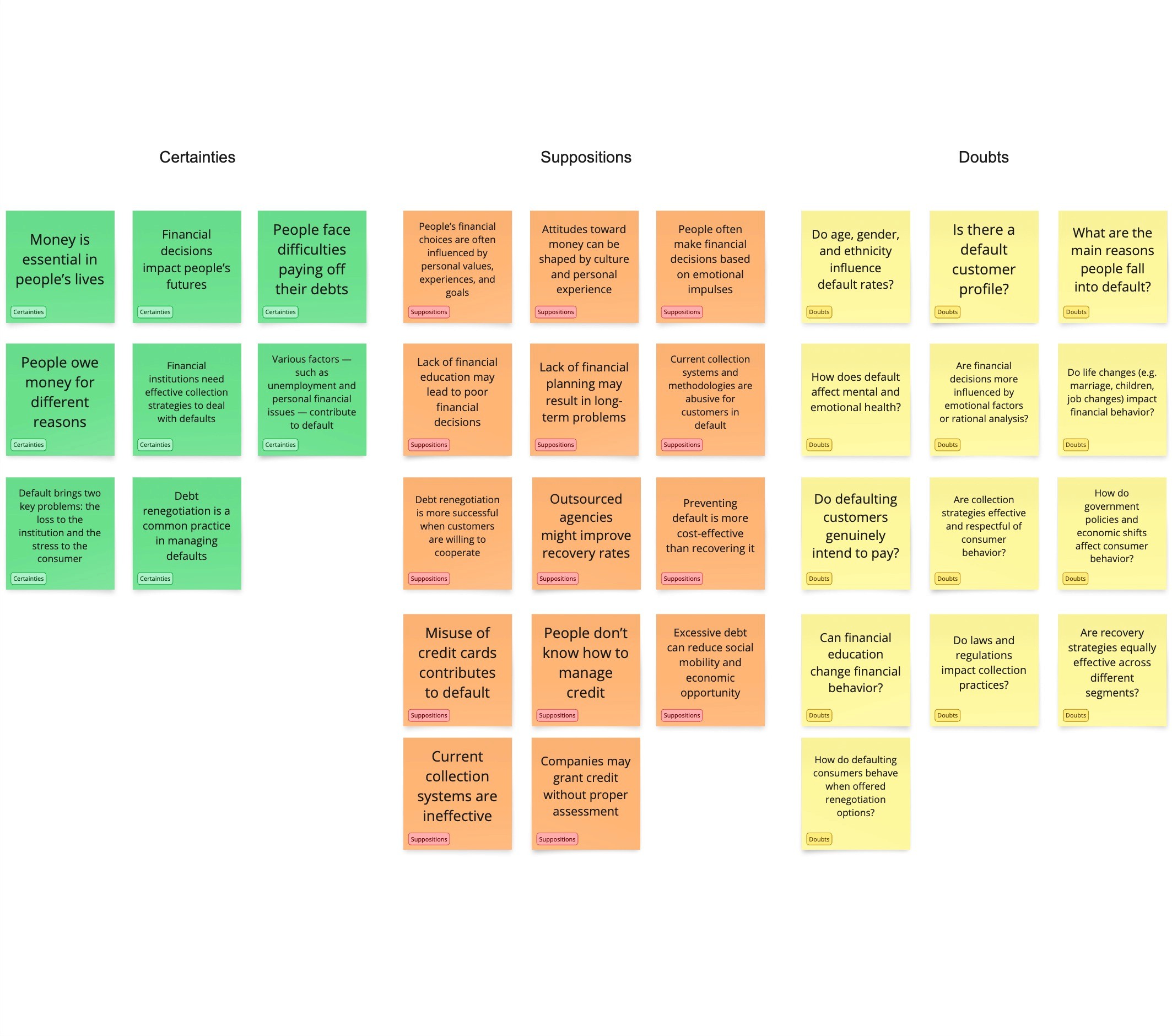
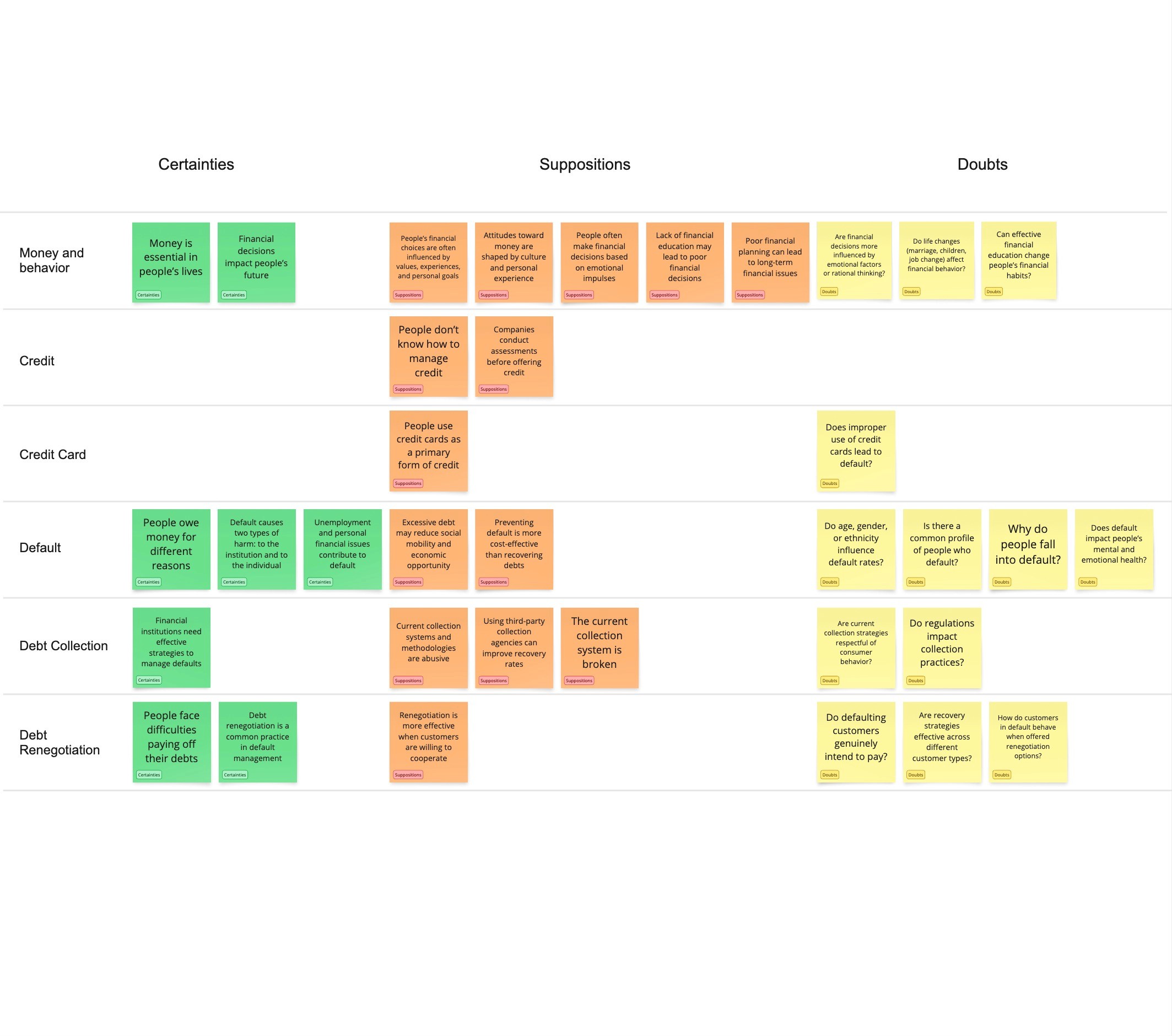
A framework used to organize prior knowledge by mapping what’s known (Certainties), assumed (Suppositions), and still unknown (Doubts). In the context of Pay Track, the CSD Matrix (figure 1) helped clarify assumptions around emotional triggers, financial behaviors, and system limitations—guiding research priorities and driving informed design decisions that led to a more intuitive, conversion-driven product. Following the CSD Matrix, insights were clustered into six key areas (figure 2)—money and behavior, credit, credit cards, default, debt collection, and renegotiation. This structure guided a targeted desk research phase to validate certainties, test assumptions, and clarify doubts, laying a solid foundation for informed and strategic design decisions
Desk Research
Desk research is the process of gathering and analyzing existing data from credible sources to build a foundational understanding of a subject. In this case, it served to unpack and expand the insights gathered through the CSD Matrix, enabling a deeper exploration of the debt collection landscape. This phase brought clarity to key challenges and opportunities, grounding the project in context and evidence. Key insights: Debt is Emotional: Default triggers shame and anxiety, which block action. Low Financial Literacy Fuels Inaction: Many users don’t understand credit or negotiation processes. Lack of Trust: Current solutions feel aggressive or confusing, reducing engagement. Context Matters: Timing, tone, and clarity are key to conversion. Life Happens: Default often results from unexpected events, not irresponsibility. Users Need Clarity: Centralizing debt info builds trust and motivates action.
02
Define Phase
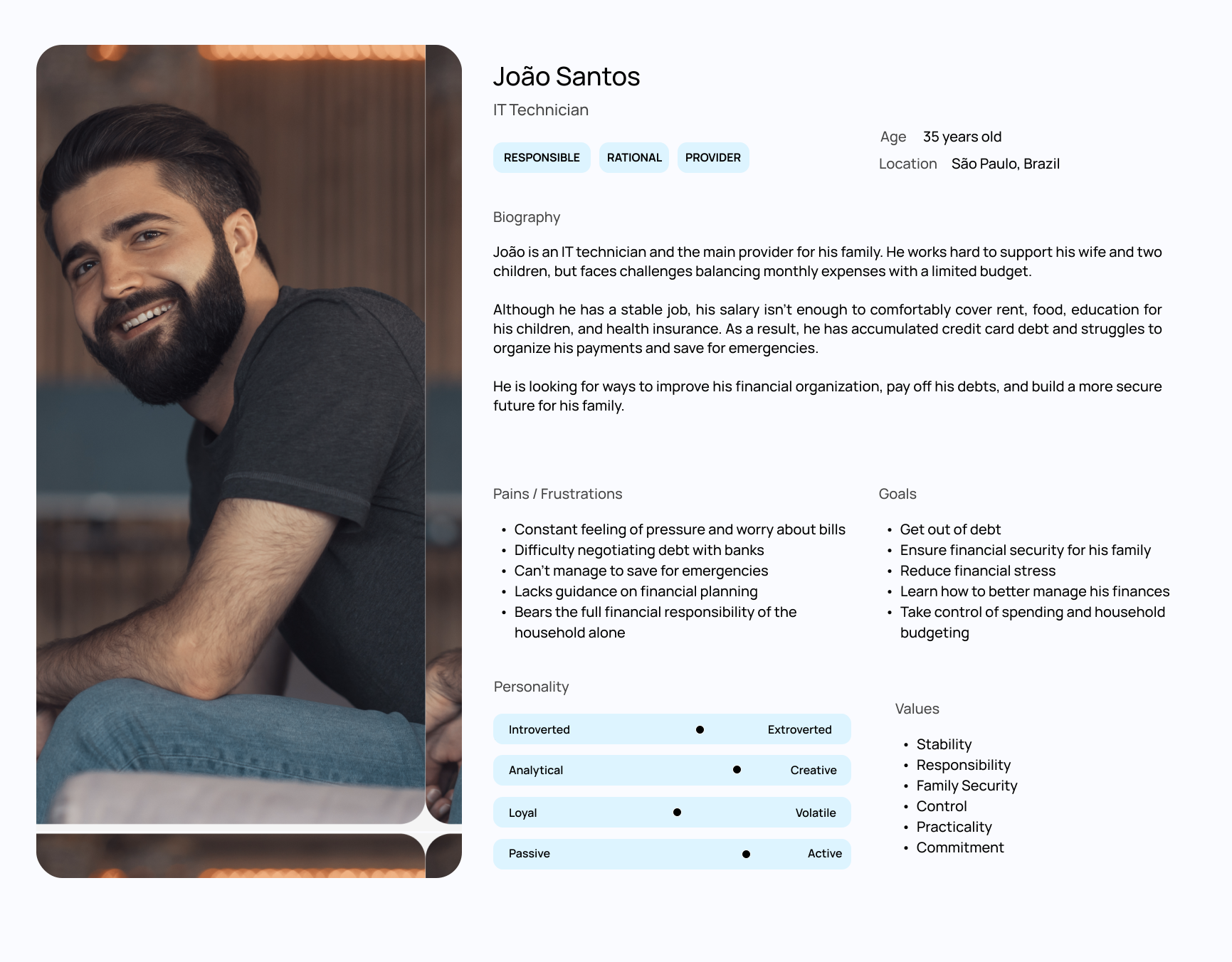
Personas
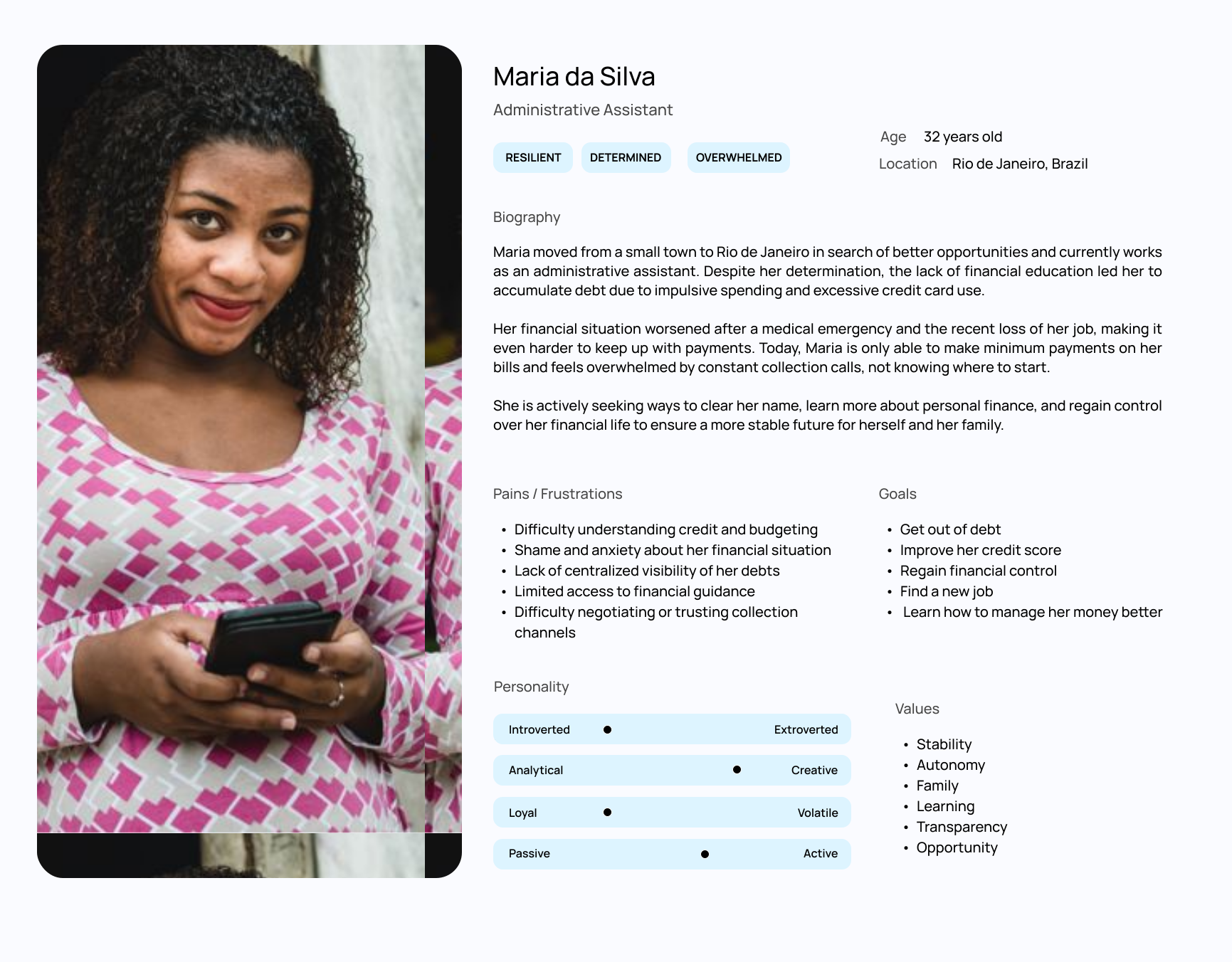
Personas are research-based profiles that represent key user groups with shared goals, behaviors, and pain points. They’re not stereotypes—but archetypes grounded in real insights and help teams build empathy, align around user needs, and stay focused throughout the design process. In this project, they were shaped by key findings from the CSD Matrix and desk research, guiding decisions for the solution.
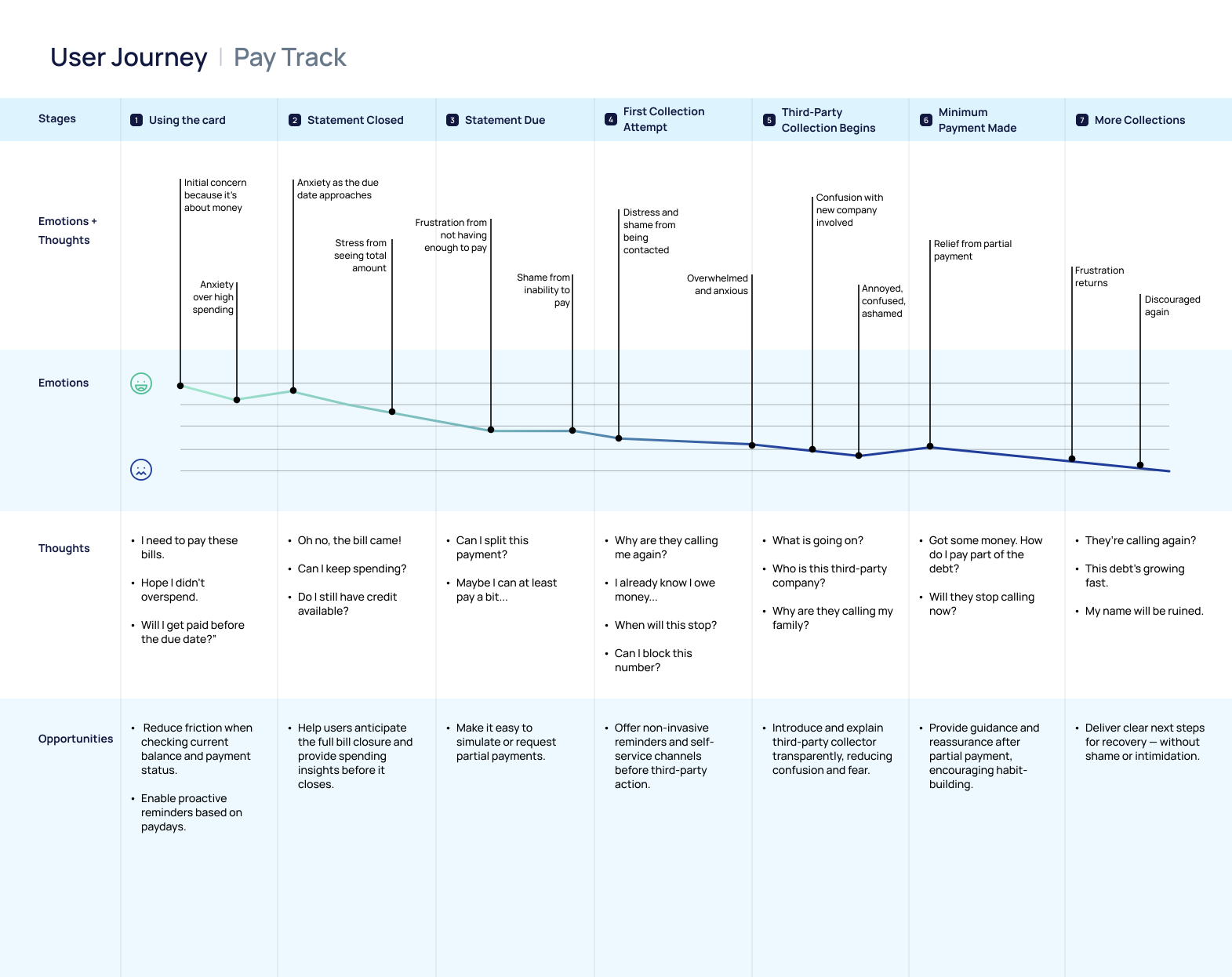
User Journey
User Journey visualize the user experience across time, helping teams understand pain points, behaviors, and opportunities from a human-centered perspective. The map below illustrates the current experience of key personas throughout the debt collection process—highlighting friction, emotional triggers, and gaps that informed design decisions.
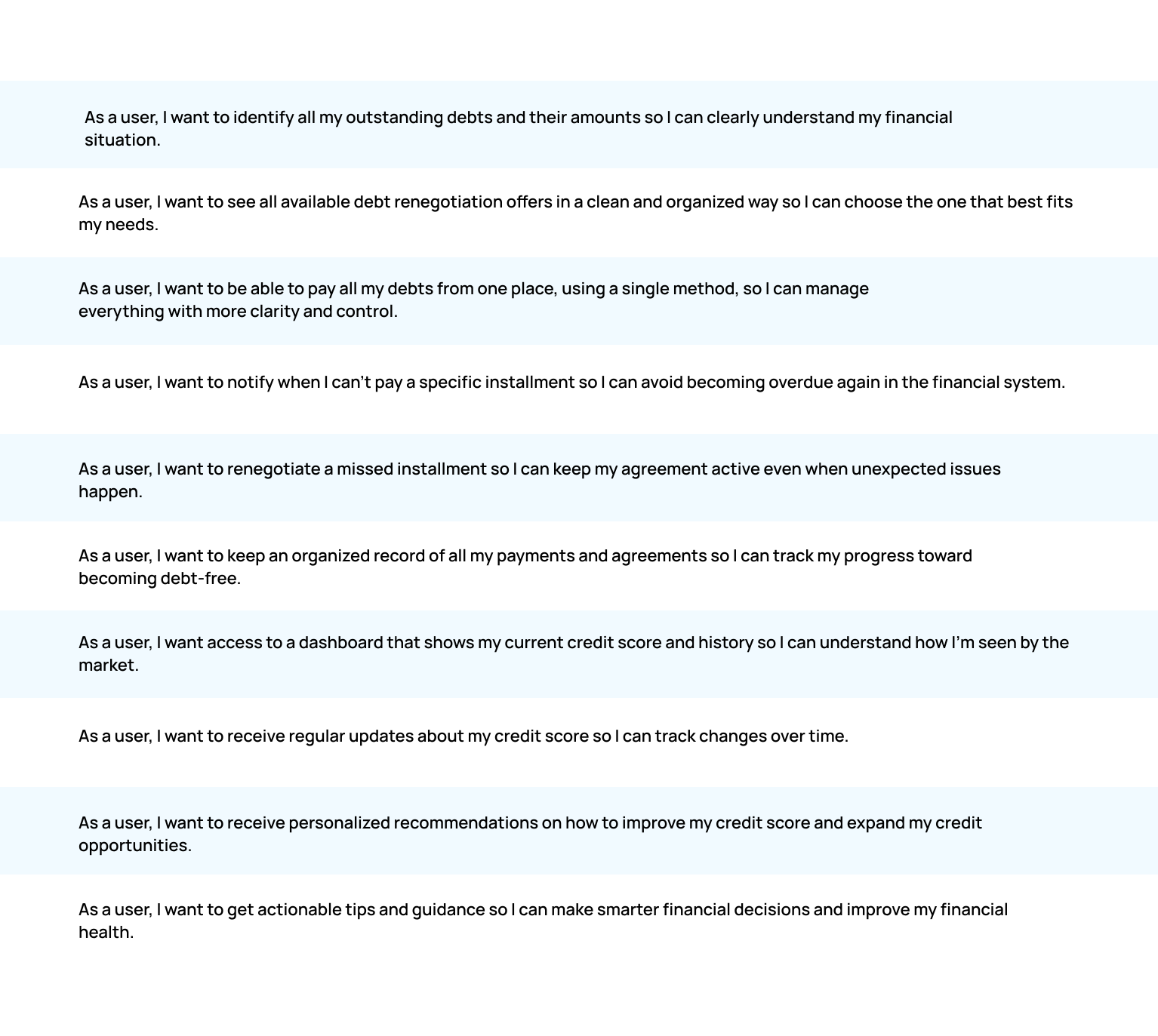
User Stories
Grounded in the journey map and user goals, was identified key pain points and translated them into prioritized user stories — each tied to real needs and opportunities. These stories reflect the core objective shared across personas: regaining financial control. They’re listed below in order of relevance to the solution's impact and value.
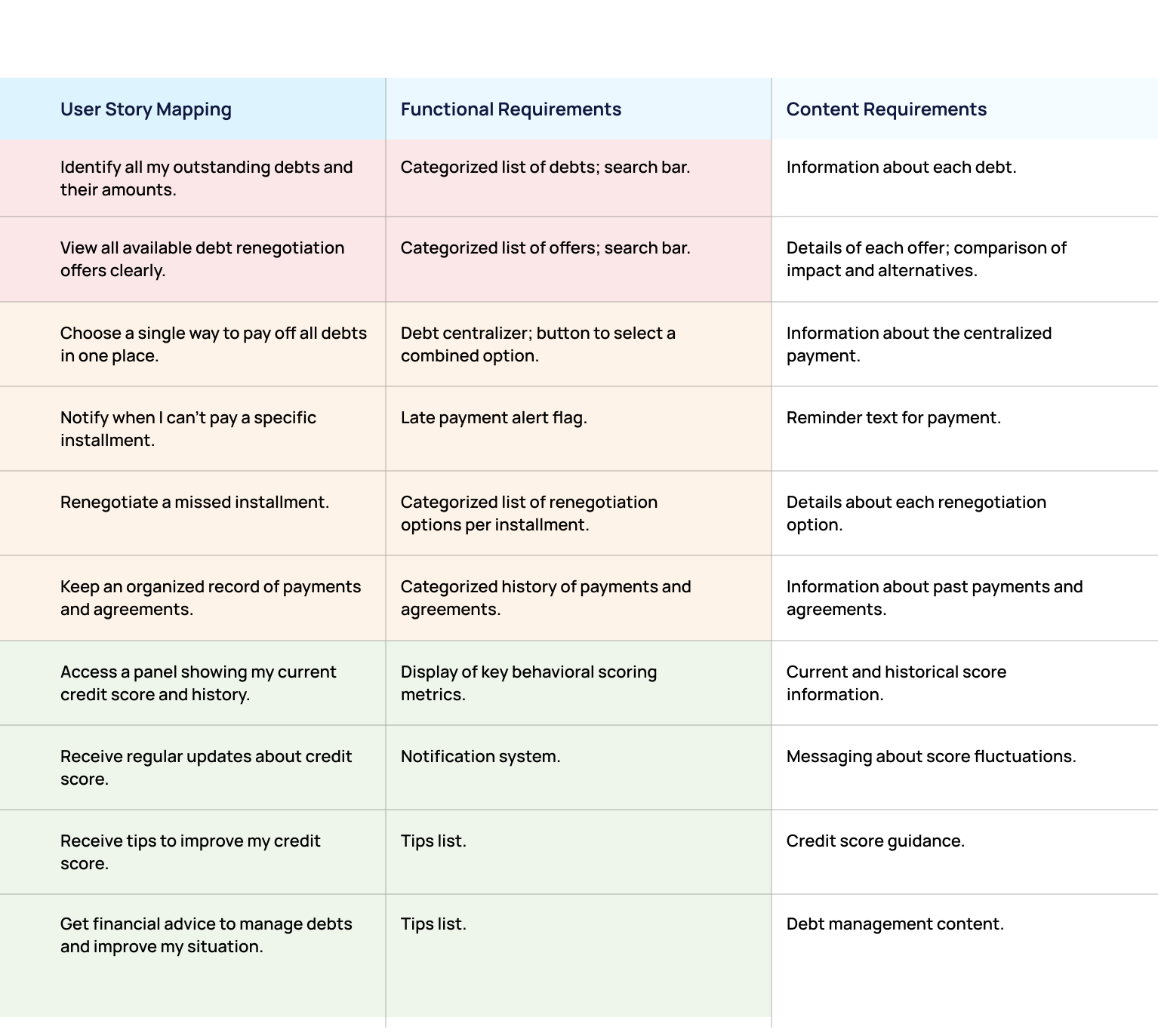
Feature Map
Based on the user journeys and stories, a feature mapping was created to define what the solution must deliver — both in function and in content. It outlines the essential features, tools, and information needed to meet user goals and drive meaningful outcomes.
03
Design Phase
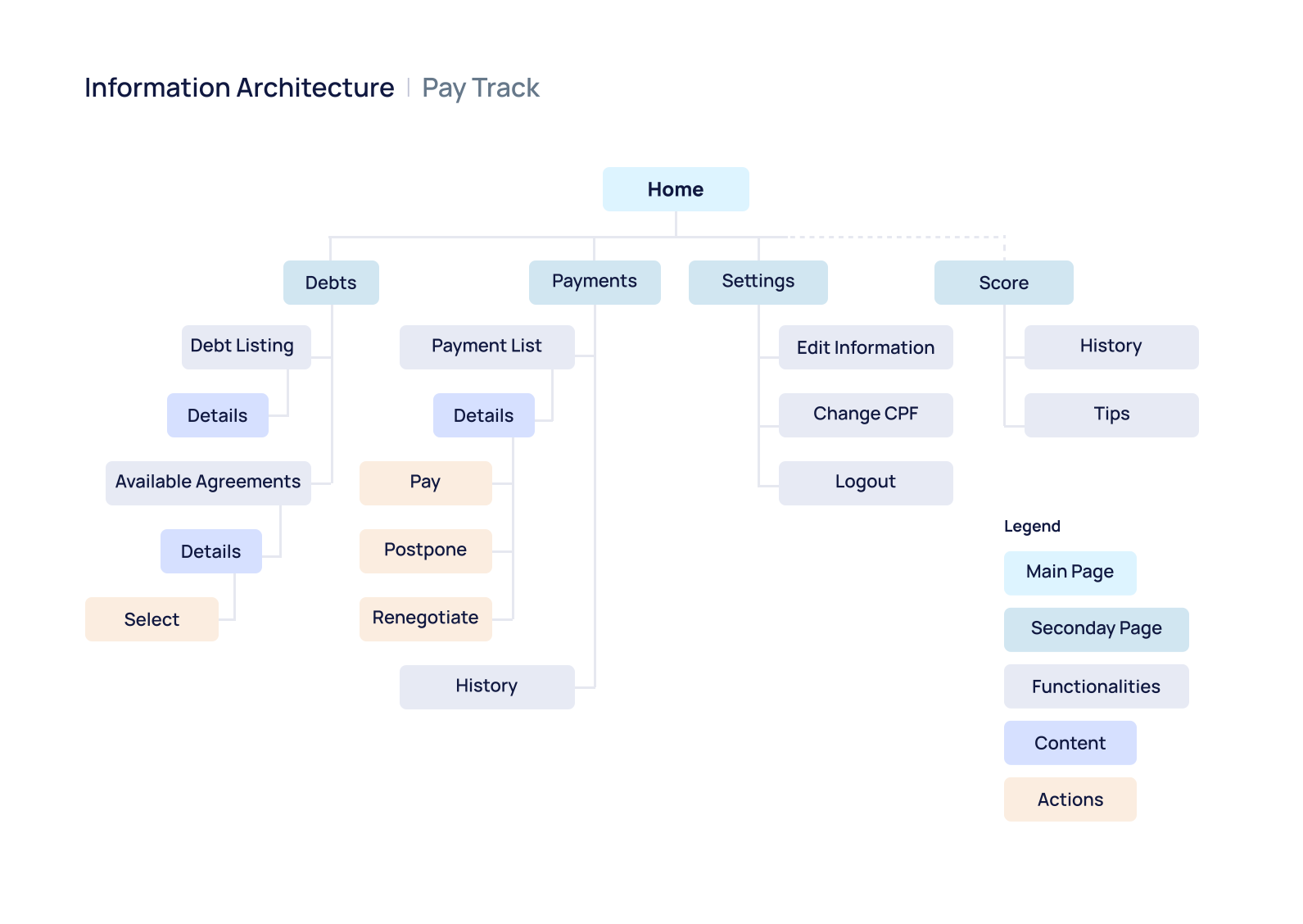
Information Architecture
A sitemap was used to define the app’s structure — mapping out key flows, features, and content into a clear and actionable information architecture. This helped align user needs with functionality and ensured a scalable, intuitive experience.
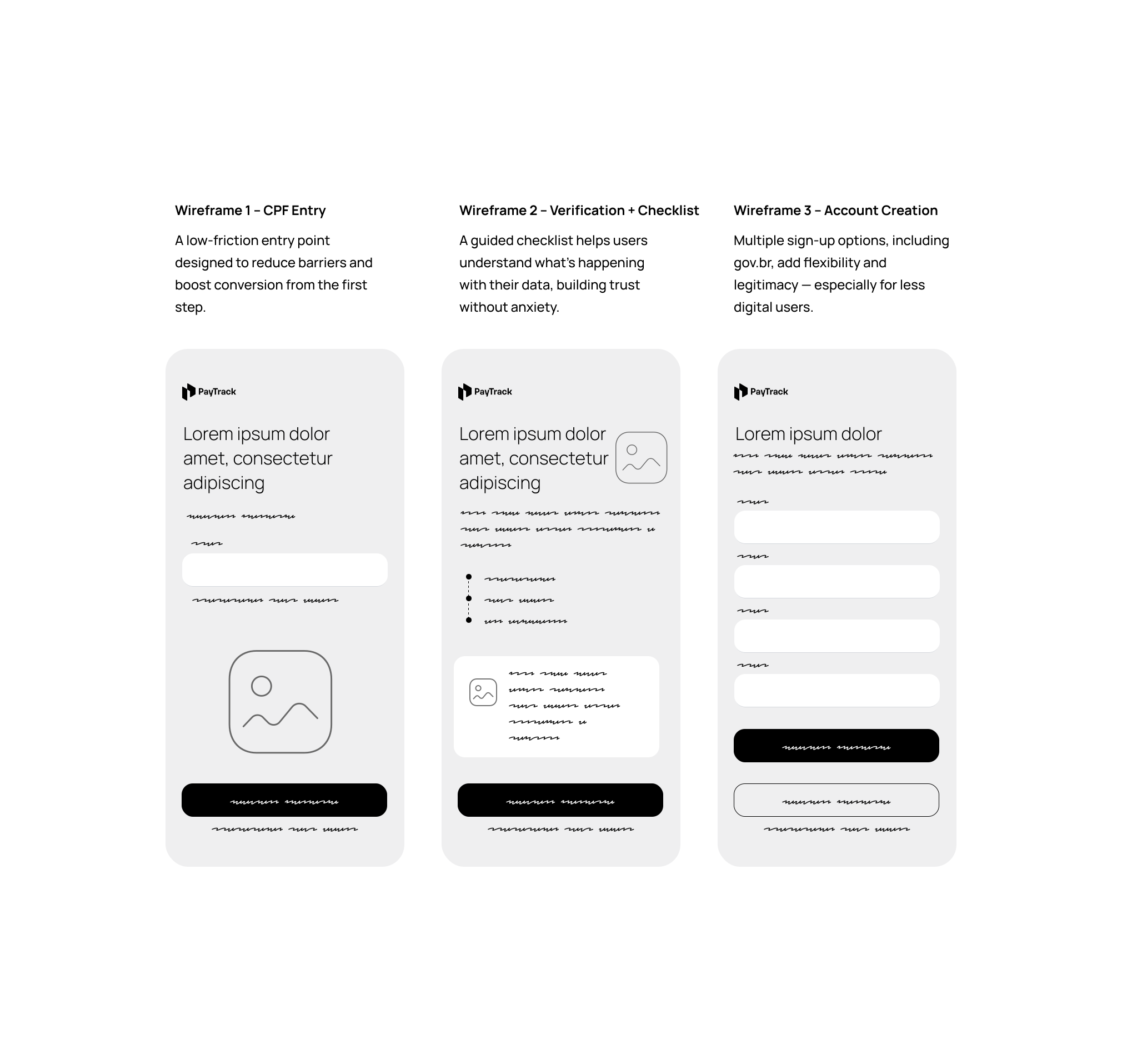
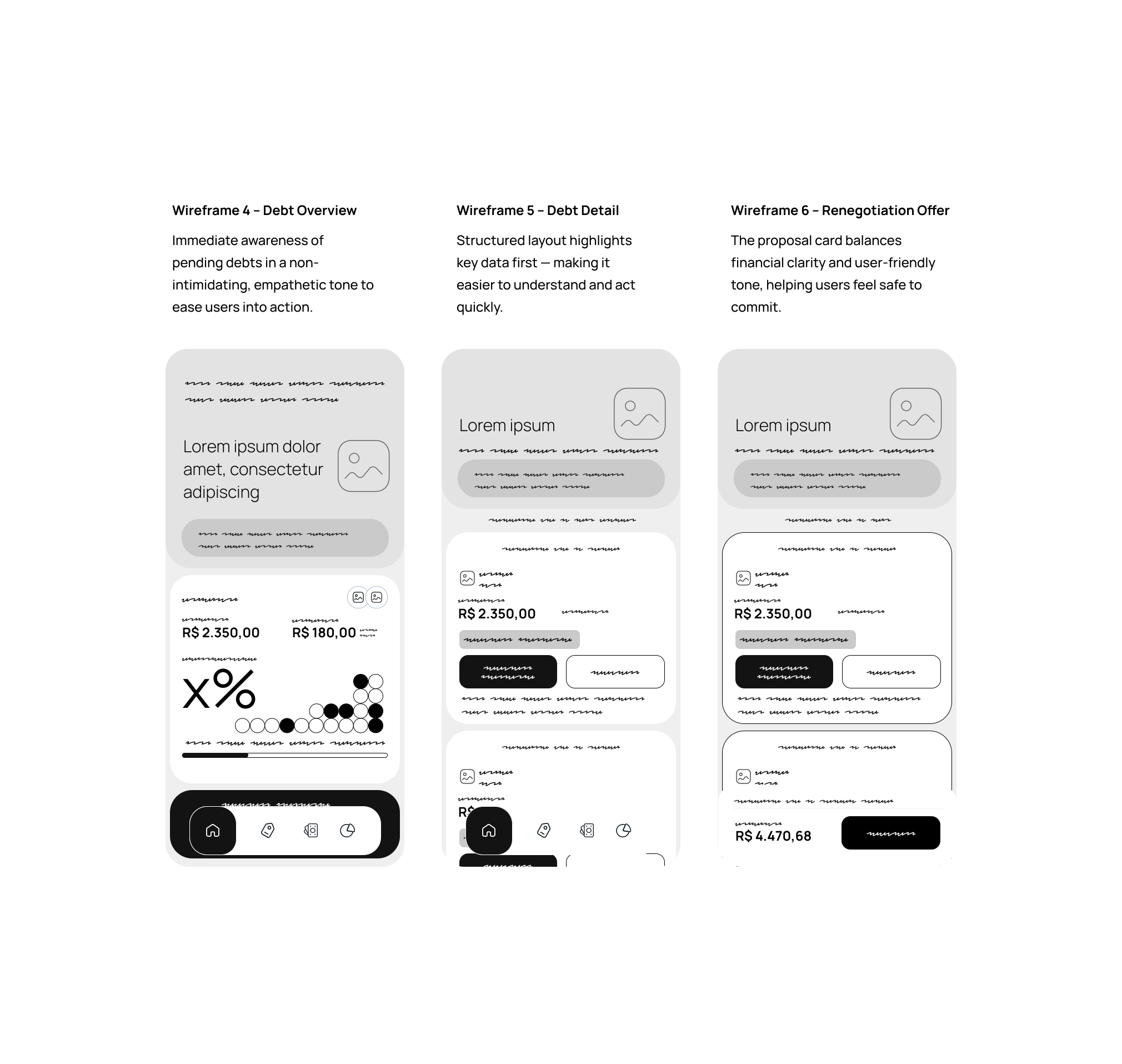
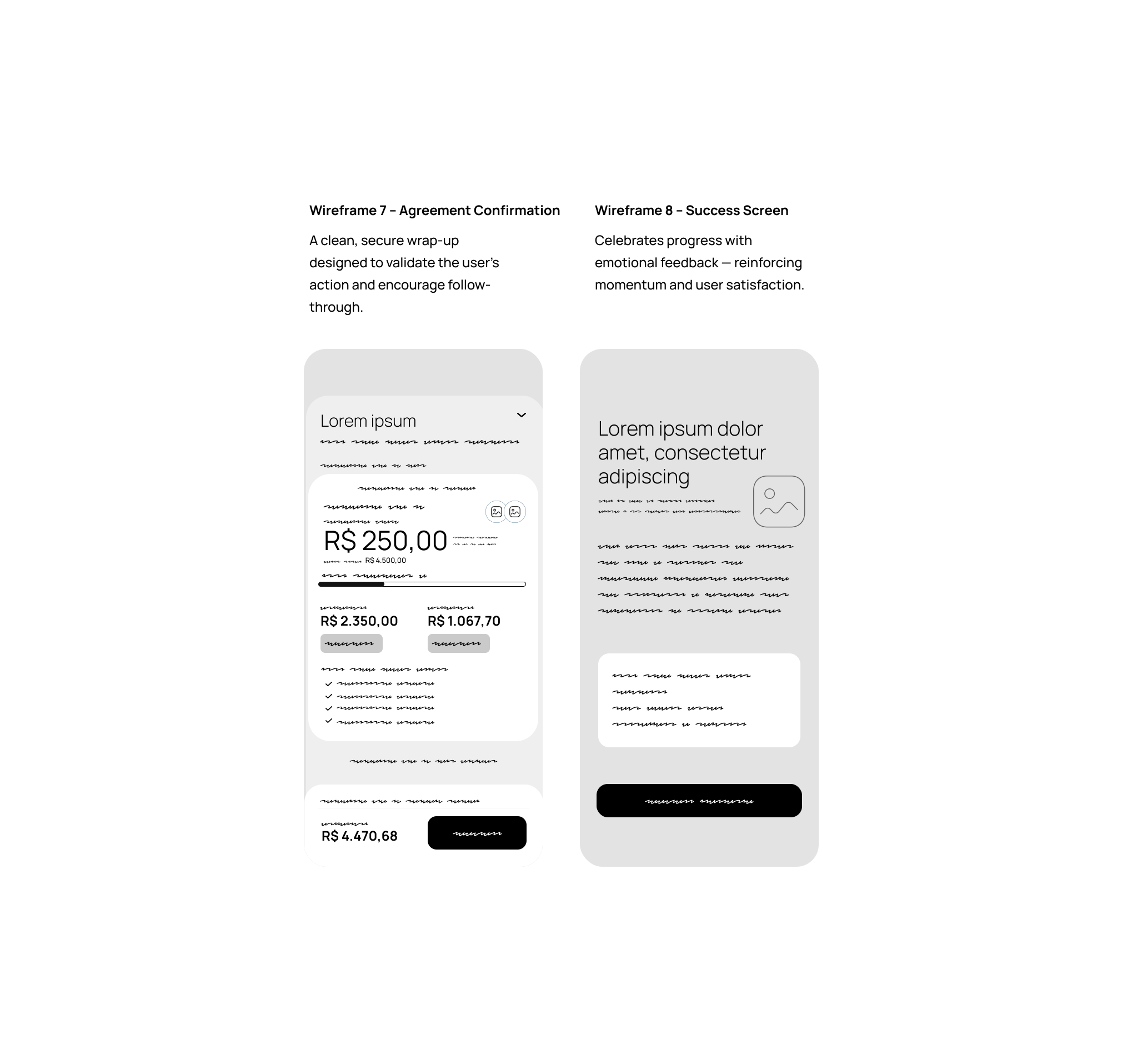
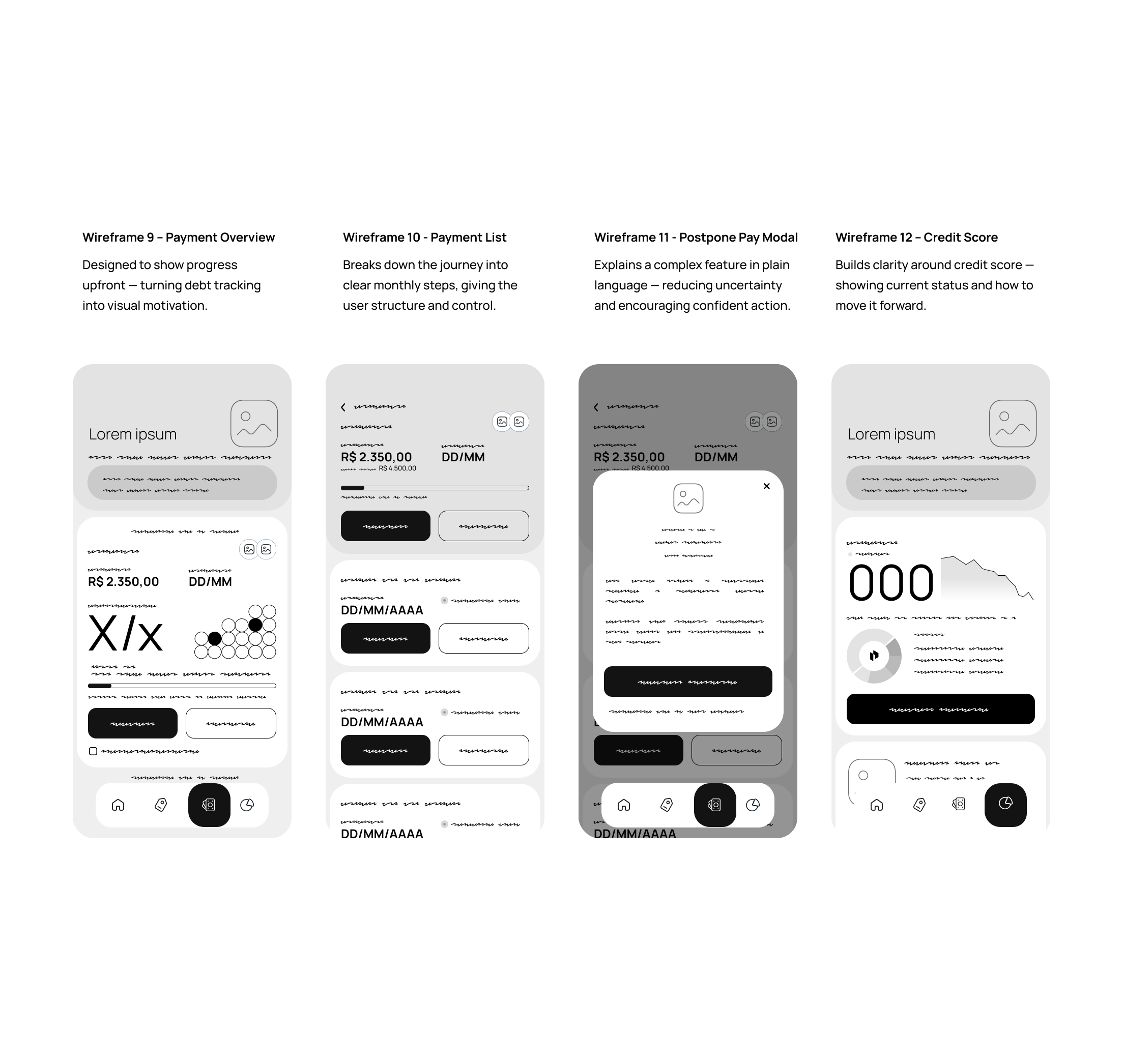
Wireframes
Low-fidelity wireframes were created to define layout structure, content hierarchy, and key interactions. This stage focused on translating strategy into interface—shaping the foundation for usability, clarity, and flow.
04